
Your HP printer won’t cooperate until it has the right software running behind it. When you download HP printer drivers, you’re giving your computer the instructions it needs to communicate with your printer, without them, nothing prints. Outdated or missing drivers cause most of the "printer not found" errors and print quality issues users encounter daily.
Finding the correct driver for your specific model shouldn’t require a computer science degree. Yet many users waste hours searching through generic download sites or installing incompatible software that creates more problems than it solves. The key is knowing exactly where to look and which files your system actually needs.
This guide walks you through locating, downloading, installing, and updating HP printer drivers across Windows, macOS, and mobile platforms. At 123.hp.com/setup, we’ve organized this process into clear, actionable steps so you can get your printer working in minutes, not hours. Whether you’re setting up a brand-new device or troubleshooting an existing one, you’ll find the exact instructions you need below.
Before you start: model, OS, and connection type
Three pieces of information determine which driver file you need, and gathering them now saves you from downloading the wrong software later. Your printer model, your operating system version, and your connection type all dictate which installation package will work. Spending two minutes to confirm these details prevents the frustration of failed installations and incompatibility errors that waste your time.
Locate your printer model number
Your printer’s exact model number appears in multiple locations on the device itself. Check the front panel near the control screen, the back panel near the power cord, or inside the ink cartridge access door. HP uses specific naming conventions like "OfficeJet Pro 9015e" or "LaserJet M234dwe," and you need the complete alphanumeric string, not just "OfficeJet" or "LaserJet."
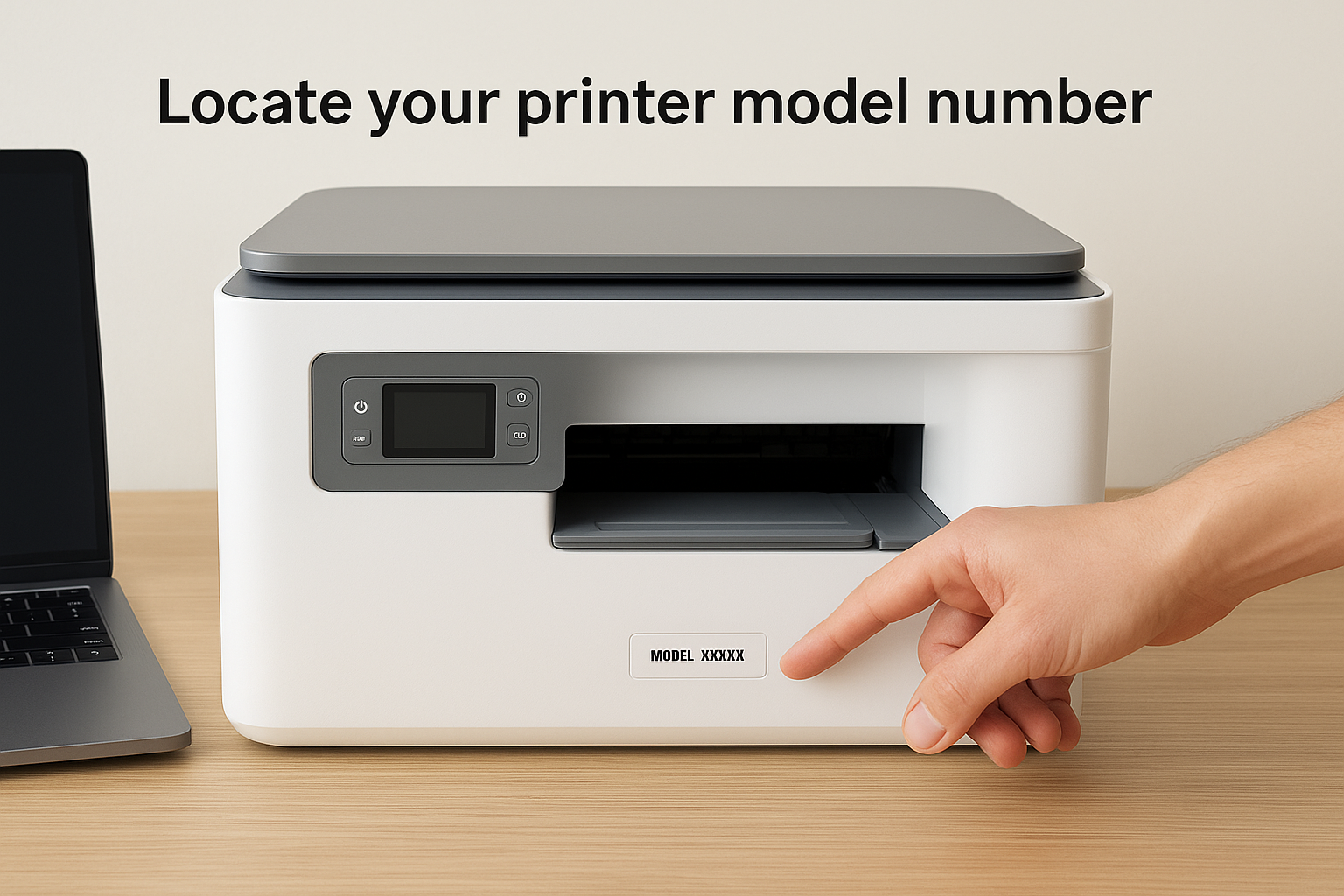
Write down the full model number exactly as it appears, including letters and numbers. If you’ve misplaced the physical printer or can’t read the label, you can often find the model in your printer’s embedded web server by typing its IP address into a browser while connected to the same network.
Check your operating system version
Before you download HP printer drivers, you must confirm which operating system version runs on your computer. Windows users should click the Start button, type "About your PC," and look for the version number (Windows 10, Windows 11, etc.). Mac users should click the Apple menu, select "About This Mac," and note the macOS version like "Ventura 13.2" or "Sonoma 14.1."
Downloading drivers for the wrong OS version leads to installation failures and error messages that suggest your printer is incompatible when it’s actually just the software mismatch.
Operating systems receive major updates that change driver requirements. A driver built for Windows 10 may not function correctly on Windows 11, even though the printer itself supports both. Record your exact version number rather than assuming you have the latest update.
Confirm your connection method
Your printer connects to your computer through USB, Wi-Fi, or Ethernet, and each method may require different driver packages. USB connections typically need the most comprehensive driver installation because they handle all communication through that single cable. Wireless connections often work best with HP’s full-feature software that includes network configuration tools.
If you plan to use Wi-Fi Direct or connect through a network print server, mention that during the installation process. Some installation wizards ask which connection type you prefer and customize the driver package accordingly. Knowing your intended connection method before you start prevents having to reinstall drivers later when you switch from USB to wireless printing.
Step 1. Find the right driver from HP
HP maintains a dedicated support website where you can download HP printer drivers directly from the manufacturer, eliminating the risk of malware-infected files from third-party sites. The official HP Support page at support.hp.com provides the most current, tested drivers for every printer model the company has released. Starting here ensures you get authentic software that won’t compromise your system security or printer performance.
Navigate to HP’s official support page
Open your web browser and go to support.hp.com, then click on "Software and Drivers" in the top navigation menu. The page will prompt you to identify your product through multiple methods. You can either let HP detect your printer automatically if it’s already connected to your computer, or you can manually enter your model number in the search field.
Automatic detection works best when your printer is turned on and connected via USB or already configured on your network. The system scans your computer’s connected devices and displays any HP products it recognizes. If detection fails or you’re downloading drivers for a printer that isn’t connected yet, use the manual entry option with the model number you recorded earlier.
Enter your printer model and select your OS
Type your complete printer model number into the search box and press Enter. HP’s system will display your specific printer with an image and full model name for confirmation. Click on your printer to access its dedicated support page, where you’ll see multiple tabs for drivers, manuals, and troubleshooting resources.
The software selection page automatically detects your operating system, but you should verify it shows the correct version before proceeding.
Look for the "Software and Drivers" section on the product page. HP displays your detected operating system at the top, usually with a statement like "Detected: Windows 11" or "Detected: macOS Sonoma." If the detection is incorrect, click "Change" or the dropdown menu to manually select your actual OS version. The page will refresh and display only compatible driver packages for your chosen system, preventing you from downloading files that won’t work on your computer.
Step 2. Download and install on Windows
Windows installations require you to download HP printer drivers as an executable file, then run it through an automated setup wizard that configures your printer connection. The process takes between 5 and 10 minutes depending on your internet speed and whether you choose a full feature driver or a basic one. HP provides two main options: the full solution software that includes scanning utilities and maintenance tools, or a streamlined driver that handles printing only.
Download the driver package
Click the "Download" button next to the recommended driver package on HP’s support page. Windows typically saves the file to your Downloads folder automatically, and the file name will start with your printer model number followed by version information. The download size ranges from 50 MB to 300 MB depending on whether you selected the complete software bundle or just the essential driver.
Wait for the download to finish completely before closing your browser, as interrupted downloads create corrupted files that won’t install properly.
Your browser displays the download progress in the lower left corner or in a separate downloads panel. Once complete, click on the downloaded file or navigate to your Downloads folder and double-click the .exe file to launch the installer.
Run the installation wizard
The HP installer opens with a User Account Control prompt asking for permission to make changes to your device. Click "Yes" to proceed, and the installation wizard will extract files and present setup options. Select your preferred installation type when prompted: "USB," "Wireless," or "Wired Network," then click "Continue."
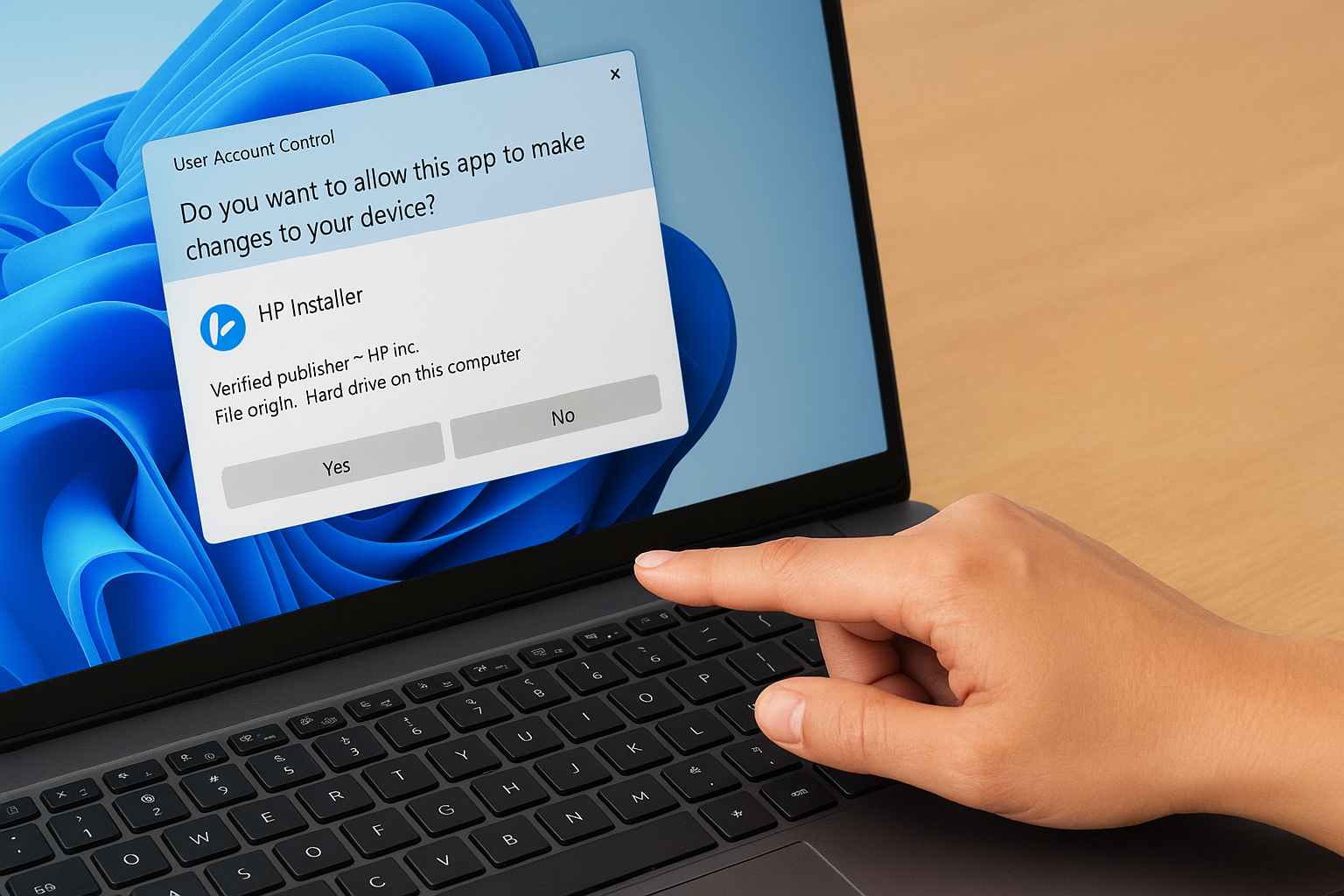
Follow the on-screen instructions exactly as they appear. The wizard will ask you to connect your printer at the appropriate moment, so don’t plug in the USB cable until you see that specific instruction. For wireless installations, ensure your printer is powered on and within range of your Wi-Fi router. The software will search for available printers on your network and display them in a list for selection.
Verify the installation
After the wizard completes, open Windows Settings by pressing Windows key + I, navigate to "Bluetooth & devices," then click "Printers & scanners." Your HP printer should appear in the list with a "Ready" status. Print a test page by clicking on your printer name, selecting "Manage," and choosing "Print a test page" to confirm everything works correctly.
Step 3. Download and install on Mac
Mac installations use DMG files that mount as virtual drives on your desktop, and the installation process differs from Windows in both file handling and printer configuration. macOS includes built-in printer management through System Settings (or System Preferences on older versions), which simplifies driver installation once you have the correct software package. The entire process takes approximately 5 to 10 minutes and doesn’t require restarting your computer.
Download the driver package
Click the "Download" button for the macOS-compatible driver on HP’s support page. Your browser saves the .dmg file to your Downloads folder, and the file size typically ranges from 100 MB to 400 MB depending on whether you selected the full-feature software or a basic driver package. Safari automatically opens the DMG file after download, while Chrome and Firefox require you to double-click it manually.
macOS may display a security warning for downloaded software, which you can safely approve for official HP drivers by clicking "Open" in the dialog box.
The DMG file mounts as a new drive icon on your desktop with your printer model name. Double-click this icon to open the installer window, which contains the HP installer package and possibly a readme file with additional instructions.
Run the installation process
Double-click the .pkg file inside the mounted drive to launch the HP installer. macOS will ask for your administrator password to authorize the installation. Enter your password and click "Install Software" to proceed through the setup wizard. The installer copies files to your system and may request permission to access your network settings if you’re installing wireless printer support.
Verify the installation
Open System Settings (macOS Ventura or later) or System Preferences (earlier versions), then click "Printers & Scanners" in the sidebar. Your HP printer should appear in the list with a green dot indicating it’s ready. Click the printer name and select "Print Test Page" from the options menu to confirm successful installation and proper communication between your Mac and printer.
Step 4. Update drivers and fix common issues
Keeping your printer drivers current prevents performance degradation and security vulnerabilities that accumulate over time. HP releases driver updates every few months to address bugs, add features, and maintain compatibility with new operating system releases. Even if your printer works fine today, outdated drivers can cause problems after your next Windows or macOS update, leaving you scrambling to download HP printer drivers again when you need to print urgently.
Check for driver updates regularly
Open HP’s Smart App (available for Windows and Mac) and navigate to the printer settings menu to check for available updates. The app displays your current driver version and compares it against HP’s server to identify newer releases. Click "Update" when a new version appears, and the app handles the download and installation automatically without requiring you to visit the support website.
Windows users can also check for driver updates through Device Manager by right-clicking your printer, selecting "Update driver," and choosing "Search automatically for drivers."
Alternatively, visit support.hp.com every three months, enter your printer model, and compare the latest driver version against what you have installed. Your current version number appears in your printer’s properties dialog (Windows) or in the Printers & Scanners settings (Mac).
Fix "printer not found" errors
Restart both your computer and printer before attempting other fixes, as this resolves 60% of connection issues. For wireless printers, verify your device connects to the correct Wi-Fi network by printing a network configuration page from the printer’s control panel. If the network name doesn’t match your router’s SSID, reconnect the printer using the setup menu.
Windows users should run the built-in troubleshooter by opening Settings, navigating to "System," selecting "Troubleshoot," and clicking "Other troubleshooters." Choose the "Printer" troubleshooter to automatically detect and fix common driver conflicts.
Resolve print quality problems
Streaky or faded prints usually indicate clogged print heads rather than driver issues, but updating your driver can unlock newer maintenance utilities. Open your printer’s software suite (HP Smart or the full-feature driver package) and locate the "Maintain Your Printer" or "Tools" section. Run the "Clean Printhead" function twice, allowing the printer to complete each cycle fully before starting the next one.
Quick recap and next steps
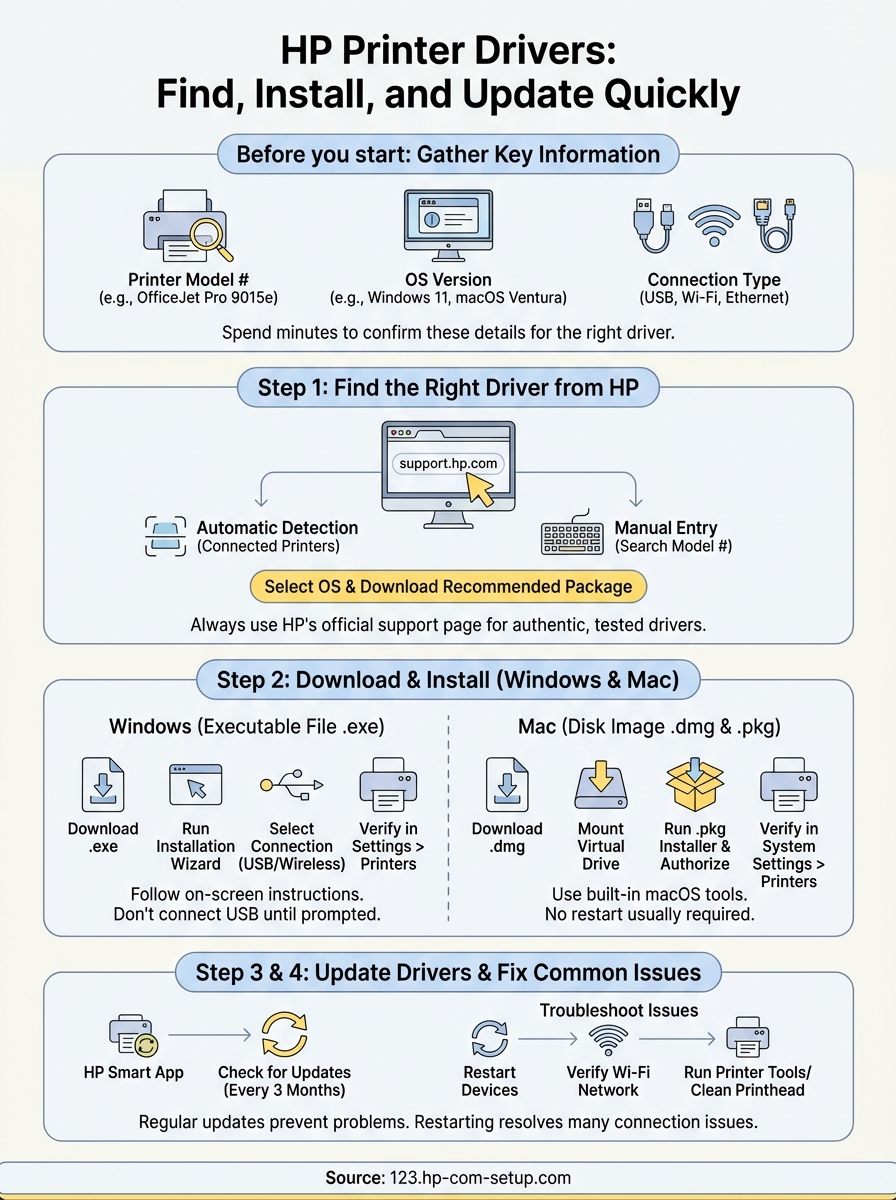
You now know how to download HP printer drivers from official sources, install them on Windows and Mac, and keep them updated to avoid common problems. The process requires three key pieces of information: your exact printer model number, your operating system version, and your connection type. Following HP’s official support page prevents security risks and ensures you get drivers that actually work with your hardware.
Regular maintenance keeps your printer running smoothly after installation. Check for driver updates every three months through the HP Smart App or the support website. When issues appear, start with basic troubleshooting like restarting devices and verifying network connections before reinstalling drivers. Most printing problems resolve quickly when you use the correct software version for your specific setup.
For complete setup guides, troubleshooting resources, and step-by-step instructions across all HP printer models, visit 123.hp.com/setup where we’ve organized everything you need in one convenient location.