
Your new HP printer is out of the box, but it won’t print a single page until you install HP printer drivers on your computer. Drivers act as the communication bridge between your operating system and the printer hardware, without them, your computer simply doesn’t know how to send print jobs to your device.
Whether you’re setting up a brand-new printer or reinstalling drivers after a system update, finding the correct software can feel overwhelming. HP offers multiple download sources and driver versions, and grabbing the wrong one can lead to connection failures, missing features, or frustrating "printer not found" errors.
This guide walks you through the complete process of downloading and installing HP printer drivers on Windows 11, Windows 10, and macOS. At 123.hp.com/setup, we break down printer installation into clear, actionable steps, so you can get printing in under 15 minutes without wading through dense technical documentation or hunting across multiple support pages.
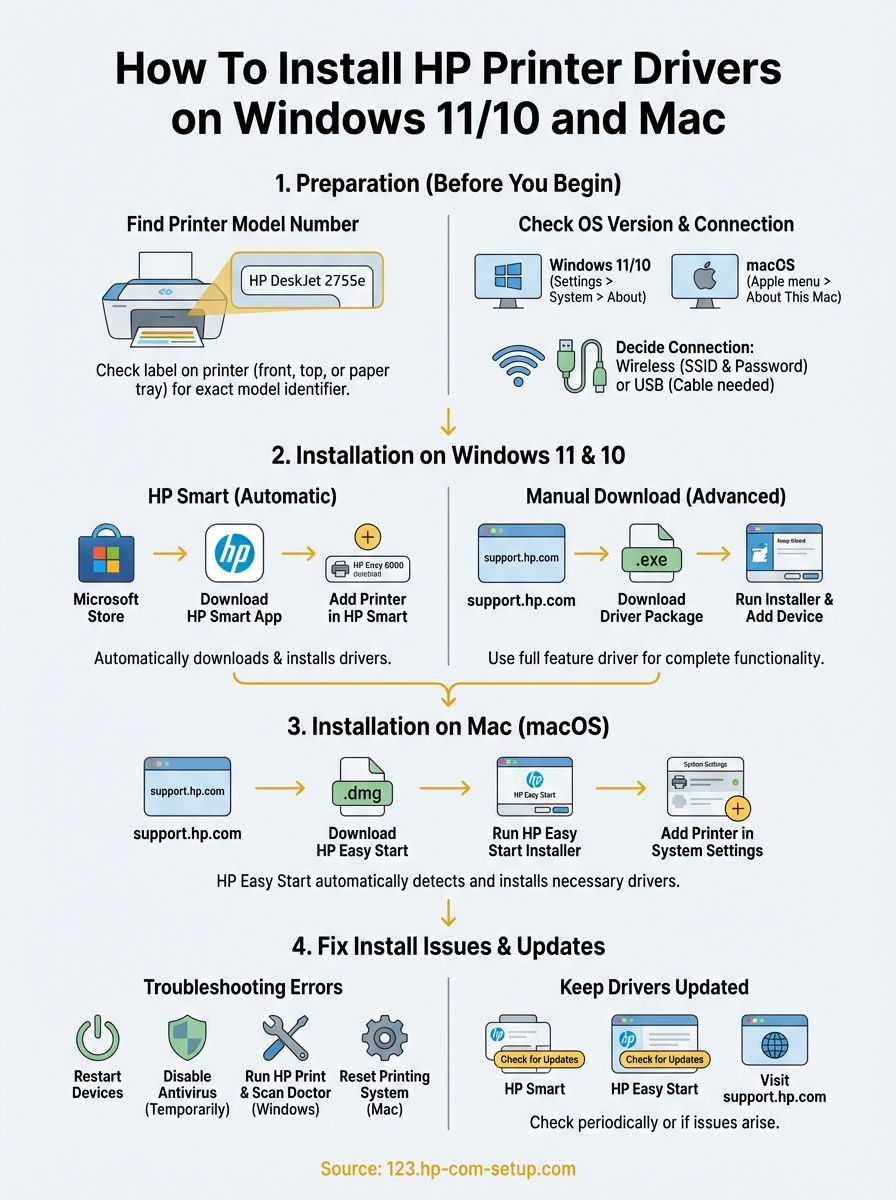
What you need before you install drivers
Before you download anything, you need to gather specific information about your printer and computer. Starting the installation process without these details forces you to stop midway, restart downloads, or worse, install the wrong driver version that won’t communicate with your hardware. Five minutes of preparation saves you from reinstalling everything later.
Find your printer model number
Your printer’s model number appears on a label attached to the front, top, or inside the paper tray. HP uses specific naming conventions like "HP DeskJet 2755e" or "HP OfficeJet Pro 9015e," and you need this exact model identifier to download the correct driver package. The model number often includes letters after the main numbers (e, a, w) that indicate different hardware revisions, so don’t skip these characters when searching for drivers.
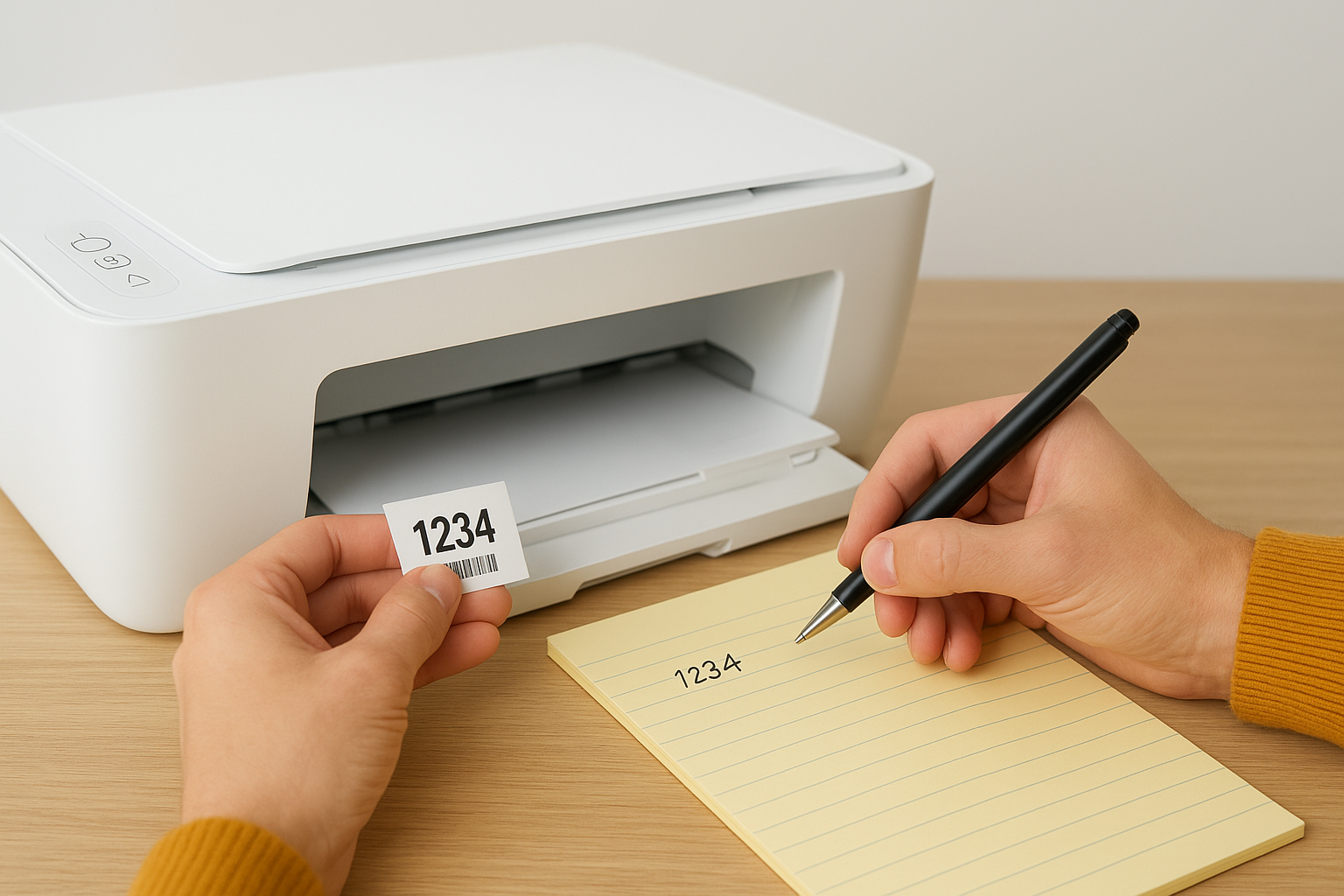
Check these common locations on your HP printer:
- Front bezel near the control panel
- Inside the cartridge access door
- Back panel near the power connection
- Bottom of the printer base
- On the original box or purchase receipt
Write down your complete model number including all letters and numbers before visiting any download page.
Check your operating system version
HP releases different driver builds for each operating system, and grabbing a Windows 10 driver for your Windows 11 machine can cause compatibility failures. You need to know your exact OS version and architecture (32-bit or 64-bit) before you learn how to install HP printer drivers successfully.
On Windows 11 or 10, press Windows key + I to open Settings, click System, then scroll to About at the bottom. You’ll see your Windows version listed as "Windows 11 Pro" or "Windows 10 Home" along with the build number. Look for "System type" to confirm if you’re running 64-bit or 32-bit architecture (nearly all modern computers use 64-bit).
Mac users click the Apple menu in the top-left corner, select About This Mac, and note the macOS version displayed such as "macOS Ventura 13.2" or "macOS Sonoma 14.1." Apple switched to Apple Silicon (M1/M2/M3) chips in 2020, so also check if you have an Intel processor or Apple chip listed under "Chip" or "Processor."
Prepare your connection method
Decide whether you’ll connect your printer via USB cable or wireless network before starting the driver installation. USB connections require a standard USB-A to USB-B cable (usually not included with the printer), while wireless setup needs your Wi-Fi network name (SSID) and password readily available. Most modern HP printers support both connection types, but you must choose one method during the initial setup process.
Wireless connections give you placement flexibility and multi-device access, but they require a stable network signal in your printer’s location. USB connections offer direct point-to-point communication with faster data transfer, though they limit the printer to one computer at a time unless you add network features later.
Install HP printer drivers on Windows 11 and 10
HP provides a unified installation tool called HP Smart that automatically detects your printer model and downloads the correct drivers for your Windows system. This application replaces the older driver-only packages and combines printer setup, maintenance tools, and scanning features in one download. You can complete the entire installation process in under 10 minutes if you follow these steps in order.
Download and run HP Smart from Microsoft Store
Open the Microsoft Store app on your Windows 11 or 10 computer by clicking the Start menu and typing "Microsoft Store" in the search bar. Once the store opens, search for "HP Smart" using the search box at the top of the window. Click the official HP Smart app published by HP Inc., then click the Get or Install button to download it to your computer.
After the download completes, Windows automatically adds HP Smart to your Start menu. Launch the application by clicking Start > HP Smart or searching for it in the Windows search bar. The app opens to a setup screen that prompts you to add your printer.
Connect your printer and complete setup
Turn on your HP printer and make sure it’s connected to the same Wi-Fi network as your computer (for wireless setup) or plugged into your computer via USB cable (for wired setup). Click the plus sign (+) or "Add Printer" button in HP Smart to start the detection process.
HP Smart scans your network for available printers and displays your printer model in a list. Click your printer name to begin the driver installation. The app downloads and installs all necessary drivers automatically without requiring you to visit HP’s support website or manually select driver files.
Windows may display a User Account Control prompt asking for permission to install printer software. Click "Yes" to proceed.
Wait for the installation progress bar to reach 100%. HP Smart notifies you when your printer is ready to use, and you can immediately print a test page to verify that you successfully learned how to install HP printer drivers on your Windows system.
Install Windows drivers manually and add the printer
Some Windows users prefer manual driver installation for better control over the installation process or when HP Smart fails to detect their printer. This method requires you to download a standalone driver package directly from HP’s website and run the installer yourself. Manual installation takes slightly longer than using HP Smart, but it works reliably when automatic detection fails or when you need to install drivers on computers without internet access after the initial download.
Download the driver package from HP
Visit the HP Support website at support.hp.com and enter your printer model number in the search box. Click on your exact printer model from the search results, then navigate to the Software and Drivers section. Select your operating system from the dropdown menu (Windows 11 or Windows 10) and architecture (64-bit or 32-bit).
HP displays multiple download options including full feature drivers and basic drivers. The full feature driver package includes printing, scanning, and maintenance utilities, while the basic driver only enables printing functionality. Download the full feature driver if you want complete printer functionality, or choose the basic driver for a faster, lighter installation.
Save the downloaded .exe file to your Desktop or Downloads folder where you can easily locate it.
Run the installation wizard
Locate the downloaded driver file (it will have a name like "HP_DeskJet_2755e_Full_Solution.exe") and double-click it to launch the installer. Windows may display a security prompt asking if you want to allow the app to make changes, click Yes to proceed.
The HP installer opens with a welcome screen that guides you through the setup process. Select your connection type (USB or Wireless) when prompted, then follow the on-screen instructions to complete the driver installation. Connect your printer when the installer tells you to do so, not before.
Add the printer in Windows Settings
After the driver installation completes, press Windows key + I to open Settings, click Bluetooth & devices, then select Printers & scanners. Click the Add device button at the top of the page. Windows scans for available printers and displays your HP printer in the list once it detects the newly installed drivers.
Click your printer name and select Add device to register it with Windows. Your printer now appears in the Printers & scanners list as ready to use, and you can print from any application by selecting it from the print dialog.
Install HP printer drivers on Mac
Mac users follow a different process to learn how to install HP printer drivers because macOS handles printer software through System Settings and the HP Easy Start utility. Apple Silicon Macs (M1, M2, M3 chips) and Intel-based Macs require the same driver packages, but you must verify that you download the macOS-compatible version rather than Windows drivers. The installation takes roughly 10 minutes and gives you full access to printing and scanning features.
Download and install HP Easy Start
Open Safari or your preferred web browser and visit support.hp.com to access HP’s official support page. Enter your printer model number in the search box, select your exact model from the results, then click on the Software and Drivers tab. Choose your macOS version from the dropdown menu (such as macOS Sonoma or macOS Ventura).
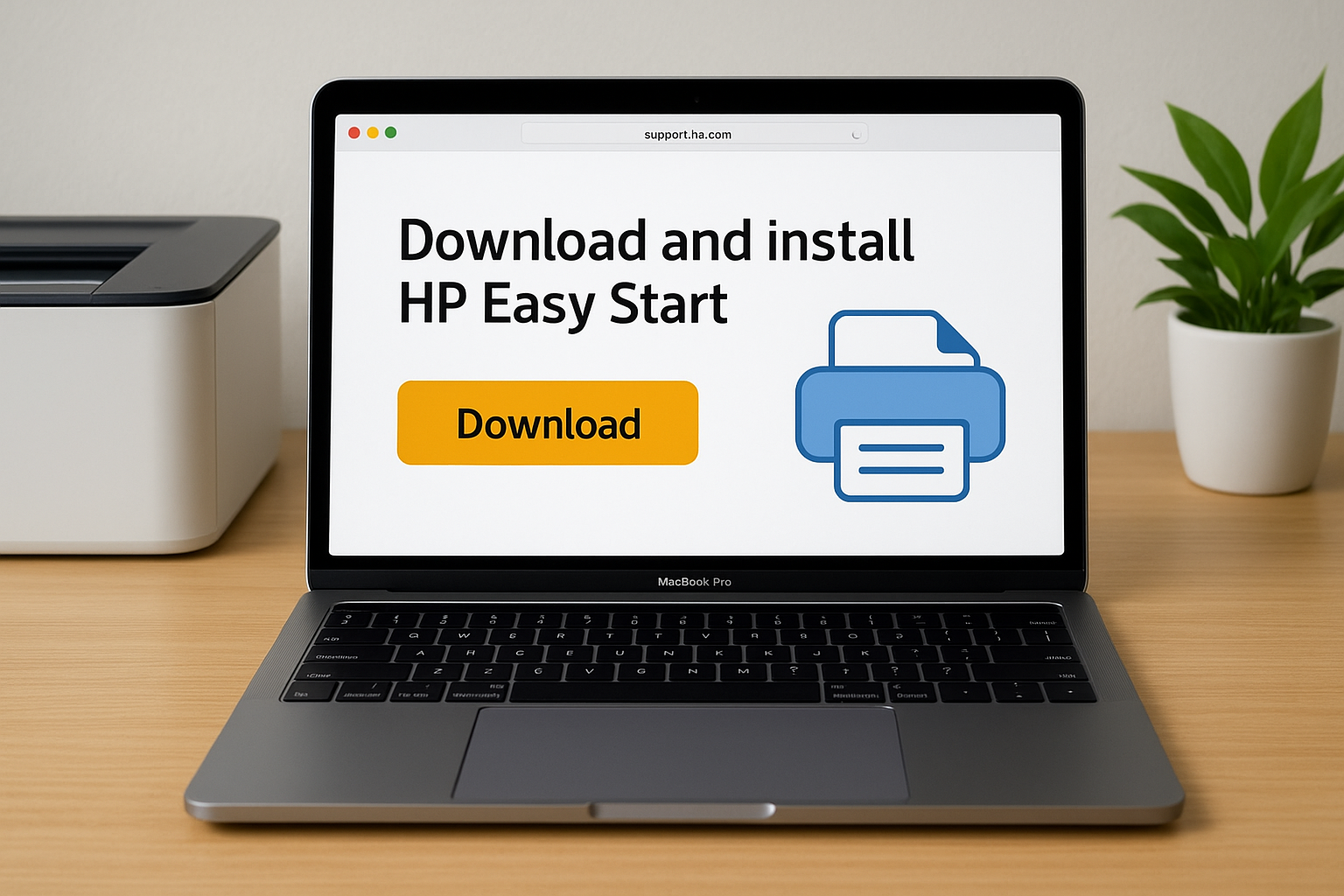
HP displays the HP Easy Start application as the recommended download for Mac users. Click the Download button next to HP Easy Start to save the .dmg file to your Downloads folder. Once the download completes, open your Downloads folder and double-click the HP Easy Start .dmg file to mount the installer disk image.
A new window appears with the HP Easy Start installer icon. Double-click the installer icon to launch the setup wizard, then follow the on-screen prompts to complete the installation. macOS asks for your administrator password to authorize the software installation, so enter your password when prompted.
HP Easy Start automatically detects your printer on the network and installs all necessary drivers without requiring manual file selection.
Add your printer in System Settings
After HP Easy Start finishes installing drivers, click the Apple menu in the top-left corner of your screen and select System Settings (on macOS Ventura and later) or System Preferences (on older macOS versions). Navigate to Printers & Scanners in the sidebar.
Click the plus sign (+) button below the printer list to add a new printer. macOS scans your network and displays available printers in a dialog box. Select your HP printer from the list, and macOS automatically applies the drivers that HP Easy Start installed. Your printer appears in the Printers & Scanners list and becomes available for printing from any application.
Fix install issues and keep drivers updated
Driver installation doesn’t always proceed smoothly, and knowing how to diagnose and resolve common errors prevents hours of frustration. Windows and macOS handle printer drivers differently, so the troubleshooting steps vary by operating system. Most installation failures stem from corrupted downloads, conflicting software, or outdated system files rather than actual hardware defects. You can resolve these issues by following systematic troubleshooting procedures that isolate and fix the root cause.
Troubleshoot common installation errors
Restart your computer and printer before attempting any other fixes. This simple action clears temporary memory conflicts and resets communication protocols between your devices. After restarting, try running the driver installation again from the beginning.
If the installer still fails, disable your antivirus software temporarily and retry the installation. Security programs sometimes flag printer drivers as suspicious files and block the installation process. Remember to re-enable your antivirus immediately after completing the driver setup.
Windows users experiencing "driver installation failed" errors should run the HP Print and Scan Doctor tool available at support.hp.com. This automated diagnostic tool identifies connection problems, removes conflicting drivers, and repairs corrupted installations without requiring manual intervention.
Download only printer drivers from official HP sources to avoid malware and compatibility issues.
Mac users should reset the printing system if drivers won’t install properly. Open System Settings > Printers & Scanners, right-click in the printer list area, and select Reset printing system. This action removes all existing printers and drivers, giving you a clean slate to learn how to install HP printer drivers correctly.
Update drivers when problems occur
Check for driver updates every three months or whenever you notice print quality degradation, connection drops, or missing features. HP releases regular updates that fix bugs and add support for new operating system versions.
Open HP Smart on Windows or HP Easy Start on Mac, navigate to the printer settings menu, and select Check for updates. The software automatically downloads and installs available updates for your printer model. You can also visit support.hp.com, enter your printer model, and manually download the latest driver package if automatic updates fail.
Next steps
You now know how to install HP printer drivers on both Windows and Mac systems using multiple methods. Whether you chose the automated HP Smart installation or the manual driver download approach, your printer should be ready to handle print jobs from any application on your computer. The drivers you installed enable full communication between your operating system and printer hardware.
Test your printer installation by printing a test page from your preferred software. Open any document, press Ctrl+P (Windows) or Command+P (Mac), select your HP printer from the list, and click Print. If the page prints successfully with correct formatting and colors, your driver installation is complete and functioning correctly.
Your HP printer needs regular maintenance and software updates to continue working properly. Visit 123.hp.com/setup for complete guides on printer maintenance, wireless troubleshooting, and advanced configuration options that help you get the most from your HP hardware. Bookmark the site for quick access whenever you need setup assistance or encounter connection problems.